Breaking News! Celebrities! Headlines! Music, Movies, TV & The Arts! Scandals! Animals! The Odd & The Off-Beat! Too Much Information, An Alternative News Source!
Denial ain't just a river in Egypt, as the old adage goes...
The residents of Sardinia are busy cleaning up after a freak cyclone by the name of Cleopatra delivered a powerful blow to the Mediterranean island, long a getaway retreat for Europeans looking for a bit of sun, sand and surf.
At least 18 people were killed and thousands left homeless after Cyclone Cleopatra deluged the island with an astonishing 450 millimeters (17 inches) of rain in only an hour and a half overnight. The torrential rain flooded the streets of cities and villages across Sardinia, off the coast of Italy, sweeping away cars, animals and people and flooding countless thousands of homes. More rain fell on the island in 90 minutes than usually falls in more than half a year, local weather officials announced. The Red Cross has stepped in, providing temporary shelter for the thousands of residents displaced by the unusual weather event.
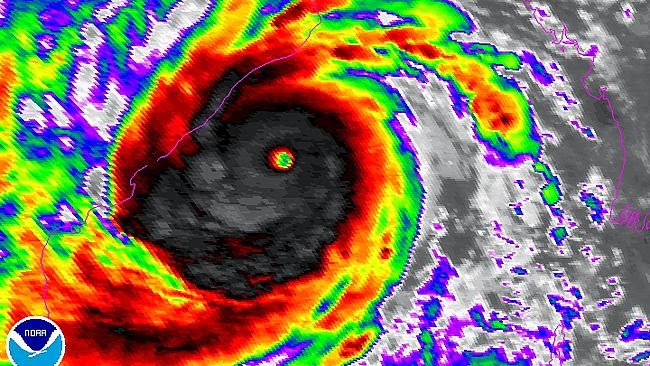
The disaster in Sardinia comes only days after an unusual November tornado outbreak swept across the US Midwest, with hundreds of tornadoes touching down and causing deaths and destruction across several states. The cyclone also follows the most powerful storm ever recorded, Typhoon Haiyan, which slammed into the Philippines as a post-Category 5 storm, leaving tens of thousands of people dead and destroying entire cities. A freak cyclone struck the coast of Somalia only two days after Haiyan's deadly voyage, killing almost five hundred people and destroying entire villages along the coast of the east African nation. A freak rain storm also struck Saudi Arabia earlier this week, dumping copious amounts of rain on a usually arid region of the world, creating havoc and destruction.
Expect more stories of a similar nature to come in the future as the runaway effects of climate change continues with a vice-like grip on the world's population:
Update: Alerts have been issued for the Philippines as Tropical Depression Zoraida threatens to form into a tropical storm/typhoon and follow virtually the same track as Haiyan. This will bring more high winds and heavy rains to areas completely devastated by Haiyan, making an already desperate situation even more desperate:
Update II: There are fears that the initial estimate of 10,000 people killed by the horrific Typhoon Haiyan is far too low in the face of this monumental cataclysm. Rescue workers have described the once vibrant Tacloban City as a "corpse-choked wasteland", with rescuers scrambling for body bags and places to bury the dead. Survivors continue to patrol the streets in shell-shocked dismay and silence, searching for surviving family members, mementos as well as food, shelter and fresh water. No city or town in Haiyan's devilish path remain standing. Many communities up the coast have been left virtually inaccessible by the overwhelming debris field, where thousands more people are certainly dead or dying. Conservative damage estimates from the storm are from between $8-15 Billion US, making this one of the most expensive disasters...this year. The human cost of this disaster is beyond measure.
There are terrifying stories coming out of the Philippines this weekend after one of the most powerful storms ever recorded, Typhoon Haiyan (Yolanda), smashed into the Southeast Asia island nation as a post-Category Five super typhoon on Friday.
Packing sustained winds in excess of 200mph, the storm lay to waste entire cities in the Eastern Samar region of the country. While official estimates on a death toll are not clear at this time, the situation in the Philippines is clearly very grim. Local officials and law enforcement in the region are calling out for global support in the rescue and clean-up efforts, begging for emergency supplies from the international community as well as body bags to contain dead bodies being recovered. In some more remote areas, officials are resorting to burying dead bodies, many unidentified, in mass graves out of fear of creating a disease epidemic.
Early estimates fear that at least 10,000 people are dead and that many others will perish due to a lack of clean, potable water, fresh food and medicine, especially in more remote regions where towns are completely inaccessible due to debris-clogged roadways. Early reports indicate that a large portion of the country's infrastructure is completely destroyed and could take years if not decades to repair.
The city of Tacloban, which has a population of over 200,000, appears to be completely devastated by the incredible force of the storm, which created a deadly tidal storm surge that swept into the city and damaged or destroyed nearly every building in the entire city. The death toll in Tacloban alone is feared to be in the thousands. A correspondent for the BBC says that thousands of people have sought temporary shelter at the local airport in Tacloban City, which sustained massive damage from Haiyan, many desperate to get flights out of the city, although only emergency aid flights are being allowed to land and leave at this time. Aerial views from the region show miles and miles of city left in complete devastation as far as the eye can see. Thousands of survivors are now roaming the debris-ridden streets in shock, in search of shelter and food. ""People are walking like zombies looking for food," said Jenny Chu, a medical student in Leyte. "It's like a [horror] movie."
The ferocious storm of the century comes only weeks after a series of less powerful storms swept across the nation as well as an intense earthquake which rattled parts of the Philippines and toppled buildings and frayed nerves, leaving more than 300 people dead.
The storm is expected to make landfall again in Vietnam early on Monday as a far less powerful storm. Over 600,000 people in Vietnam have been evacuated as a precaution from the still dangerous typhoon. New satellite imagery shows a storm currently developing over the same region that spawned Haiyan, with fears a second storm could follow close on its deadly heels.
Update: According to Weather Underground, Typhoon Haiyan is now officially the strongest storm on record, besting the old record set by Hurricane Camille, which devastated the Gulf Coast of the US in 1969:
India has emergency preparations in place as highly dangerous Cyclone Phailin, which formed only a few days ago in the Bay of Bengal, bears down on the sub-continent. The storm is as of now the equivalent of a Category Five on the Saffir-Simpson scale and is enormous in size, comparable in size to Hurricane Katrina, which devastated New Orleans and the Gulf Coast region of the United States in 2005.
Highly destructive winds well over 160 kph (100 mph) and flooding rain of at least 100-200 mm (4-8 inches) is expected across a wide area. A catastrophic storm surge of at least 4-6 meters (14-20 feet) is expected in advance of the storm making landfall on Saturday morning, local time.
The local government has issued mandatory evacuation orders for people living in the path of the ferocious storm, with several hundred thousands residents already relocated to designated shelters throughout the region. Anyone residing in the states of Orissa or eastern Andhra Pradesh is strongly encouraged to take proper precautions and prepare for life-threatening conditions as the storm makes landfall.
Phailin is the most dangerous storm to hit the region since 1999, when super cyclone Odisha hit India, killing more than 15,000 people. The areas expected to be pummeled by Phailan this weekend, specifically in an area from the cities of Visakhapatnam to Brahmapur, is home to millions of people, a majority of whom live in substandard housing.
After making landfall in northeastern India on Saturday, the cyclone will continue to track northwest through the interior of India and weaken Sunday into Monday, where heavy rain will continue to cause flooding and even mudslides through early next week.